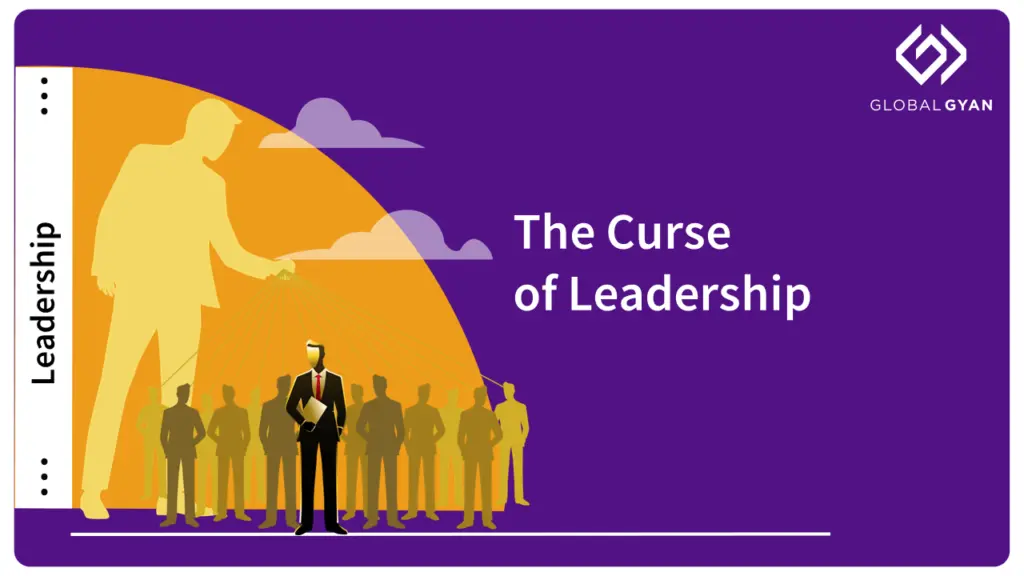
The Curse of Leadership

The Curse of Leadership

Leaders make decisions. Everyone else has an opinion.

Today, our generation is facing an unprecedented situation. The entire world battles a pandemic, every nation, state, organization, corporation and family is faced with tough choices. 

It is easy when we are faced with black or white choices… the obviously good vs. bad. All that it takes to get to the right decision is a knowledge of the laws or norms or principles. The difficulty arises when the choices are all good, or as is more likely, all varying levels of bad. This is usually when leadership is tested. You can be guided by analytical inputs, your personal morals and values, and everything else, but at the end, the leader has to make a decision… and live with the outcomes, however, unpredictable or unpalatable they might be.

And listen to everyone with an opinion on why something else would surely have been a better choice.

As I read comments from various people (across the world) on how their city, country or government is dealing with the corona virus, I am reminded of a blog post that I wrote several years ago. I am repurposing some of those lines here.

As a corporate strategist, one of my biggest battles was to avoid the extremes of cynicism and idealism. 

In every organization, you will find people who will put their hands up and say that nothing can be done. They will gladly recount all the problems and challenges but will not care to think about solutions. Moreover, they will work hard to dissuade anyone else who wishes to move forward. Often, they are charming and witty, with funny comments about the futility of doing anything. These guys are the most dangerous for any organisation, they suck all positive energy out of the system. 

Not so dangerous, yet problematic for progress are the idealists. They are the dreamers who seek perfection everywhere. Every organisation has a few of them and they are surely needed. They set the bar high on what is needed to be achieved. Where these guys go wrong (sometimes) is their belief that things must change immediately and anything otherwise is worth nothing. Instead of using their dreams to set direction for the future, they mope about the present and find fault with everything / everyone. Or they come up with crazy solutions to shake everything up (“let’s fire everybody” “let’s sell that business”).

Both the cynics and the idealists are elitists on their respective high-horses, disregarding the reality of the rest of the organization that wants to patiently move forward. The reality of every organization is between “nothing can be done” and “everything should be perfect”. A good leader will be guided by the idealist’s dreams and will weed out the cynicism. 

No leader or decision is above criticism. But let us also have the humility that maybe we don’t know it all, and display neither the cynicism nor idealism that derails a realistic way forward.


Published originally on LinkedIn

FAQ SECTION

1. What is “the curse of leadership,” as the article defines it?
That leaders must make decisions and live with the outcomes — however unpredictable or unpalatable — while everyone else is free to have opinions without bearing that responsibility.

2. What two extremes does the article warn leaders to avoid?
Cynicism (people who insist nothing can be done and drain positive energy from the organization) and idealism (people who demand immediate perfection and dismiss anything less as worthless).

3. Why does the article describe cynics as more dangerous than idealists in an organization?
Cynics are often charming and witty while actively working to dissuade others from moving forward, quietly draining an organization’s collective energy and momentum — a subtler, harder-to-spot form of damage than idealism.

4. What role do idealists play in an organization, according to the article, despite their flaws?
They’re necessary — idealists set an ambitious bar for what should be achieved, and a good leader draws on their vision for direction while filtering out any accompanying impatience or all-or-nothing thinking.

5. What is the article’s core message for leaders navigating difficult, no-good-option decisions?
To stay grounded between the extremes of “nothing can be done” and “everything should be perfect,” remain guided by idealists’ vision while rejecting cynicism, and hold the humility to accept criticism without being derailed by it.

Srinivasa Addepalli
About Srinivasa Addepalli

Srinivasa is the Founder and CEO of GlobalGyan Leadership Academy and a business strategy and leadership development expert with over two decades of experience across telecommunications, consulting, and management education. He spent close to a decade at Tata Communications as Chief Strategy Officer, leading corporate strategy, M&A and investments, and was earlier with Tata Strategic Management Group and the Tata Group's telecom entities, where he executed acquisitions including Tyco Global Network and Teleglobe. An engineering graduate from SVNIT Surat with an MBA from IIM Ahmedabad, Srinivasa is visiting faculty at IIM Ahmedabad, IIM Nagpur, IIT Hyderabad, NMIMS, and TAPMI, and an award-winning case author whose case on business ethics was the overall winner at the ISB-Ivey Global Case Competition 2014. He brings deep expertise in strategy, business acumen, innovation, and leadership communication.

View LinkedIn Profile

Pass on the Gyan!

If you liked what you read and found it useful, please share it within your network.

Get bite-sized learning nuggets delivered to your inbox directly

  • Share your views on a weekly question.
  • Actionable insights on navigating leadership challenges.
  • Seek guidance from industry experts.
Gyan Cafe

Get bite-sized learning nuggets delivered to your inbox directly

  • Share your views on a weekly question.
  • Actionable insights on navigating leadership challenges.
  • Seek guidance from industry experts.

Don't scroll past growth— join Gyan Cafe and lead smarter each week!