
Leadership Development Program @ Leading Supply Chain Enterprise

Client
Context
Supply chain excellence isn’t built through functional optimization alone—it requires leaders who understand how individual decisions ripple through interconnected systems, creating either alignment and synergy or inefficiency and breakdown. In complex supply chain environments where coordination spans multiple functions, geographies, and partner organizations, the challenge becomes particularly acute. Leaders operating in functional silos—even highly competent ones—can inadvertently create bottlenecks, communication gaps, and misalignment that undermine overall system performance.
A leading supply chain enterprise recognized this challenge among its mid-senior leadership cohort. While managers demonstrated strong functional capabilities and execution discipline within their domains, the organization needed them to develop broader systems thinking—to understand how their actions influenced outcomes beyond their immediate scope, to take ownership for enterprise-wide results rather than just functional deliverables, and to build collaborative relationships that strengthen overall system performance. The challenge was designing a high-impact intervention that could shift mindsets and behaviors within a compressed timeframe, creating lasting awareness of system interdependencies and personal responsibility for collective outcomes.
Client
Objective
The organization’s objective was to strengthen leadership ownership and systems thinking among mid-senior managers who could move beyond siloed execution to enterprise-wide perspective. They needed leaders capable of understanding how coordination gaps emerge, recognizing their personal impact on broader system performance, and taking responsibility for outcomes that extend beyond their functional boundaries. The goal was behavioral insight and mindset shift through an intensive one-day workshop that combined experiential learning with reflection, creating awareness that would translate into changed leadership behavior in daily work.
Program Design
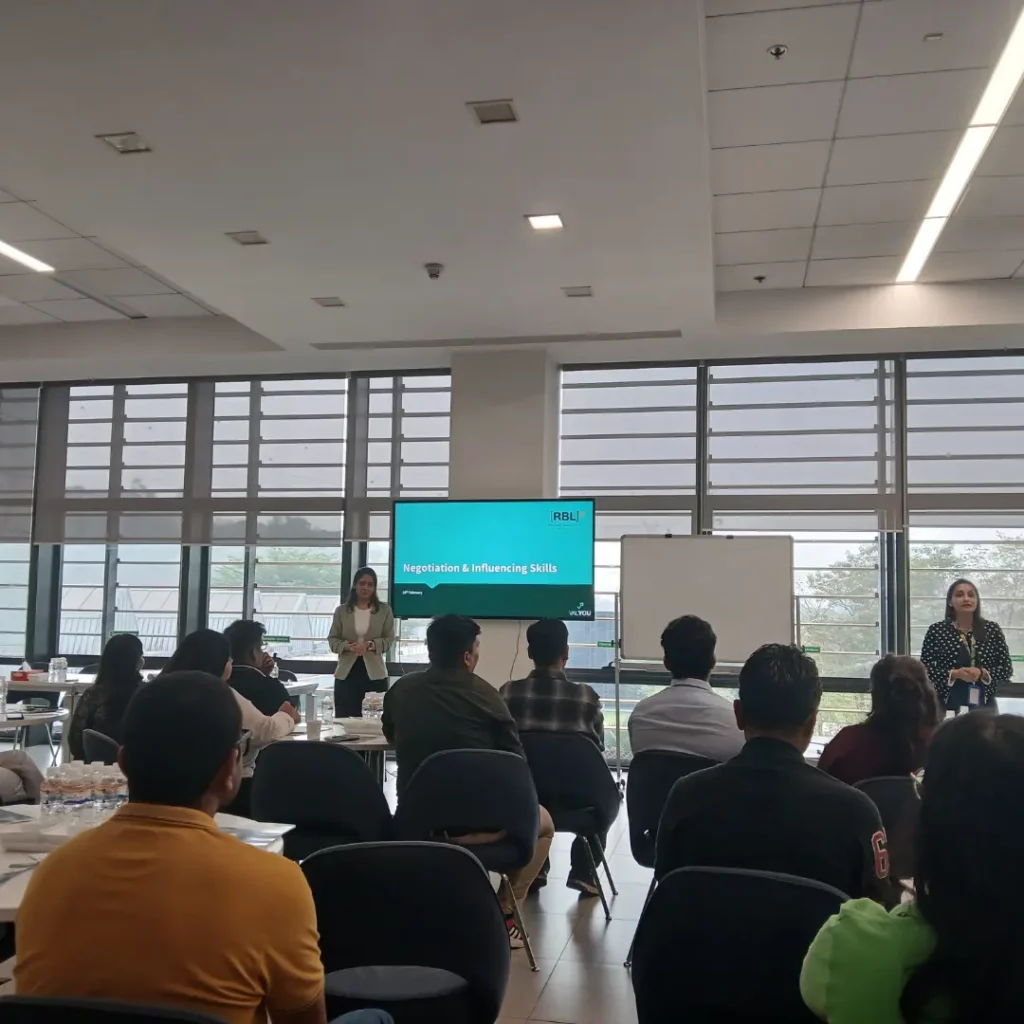
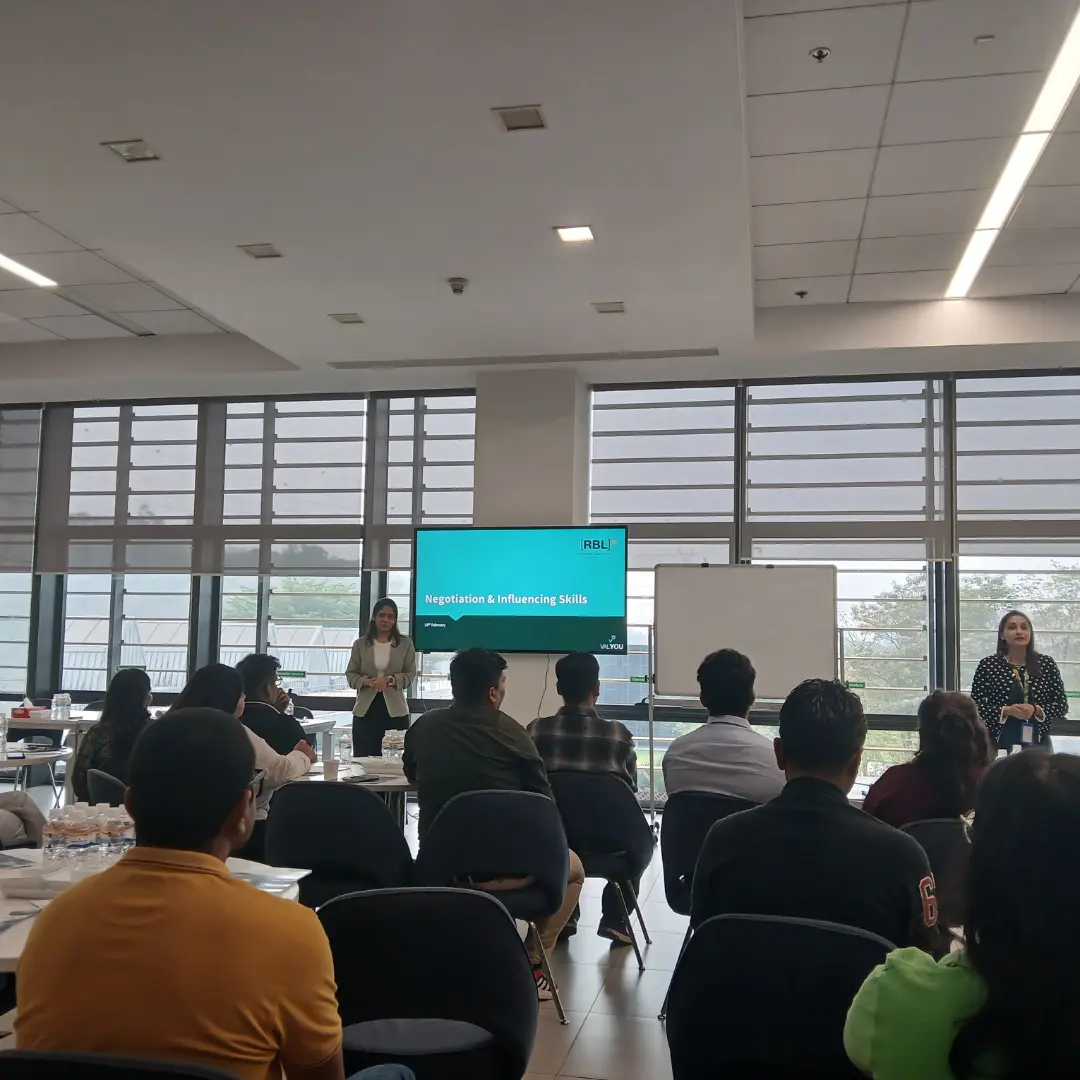
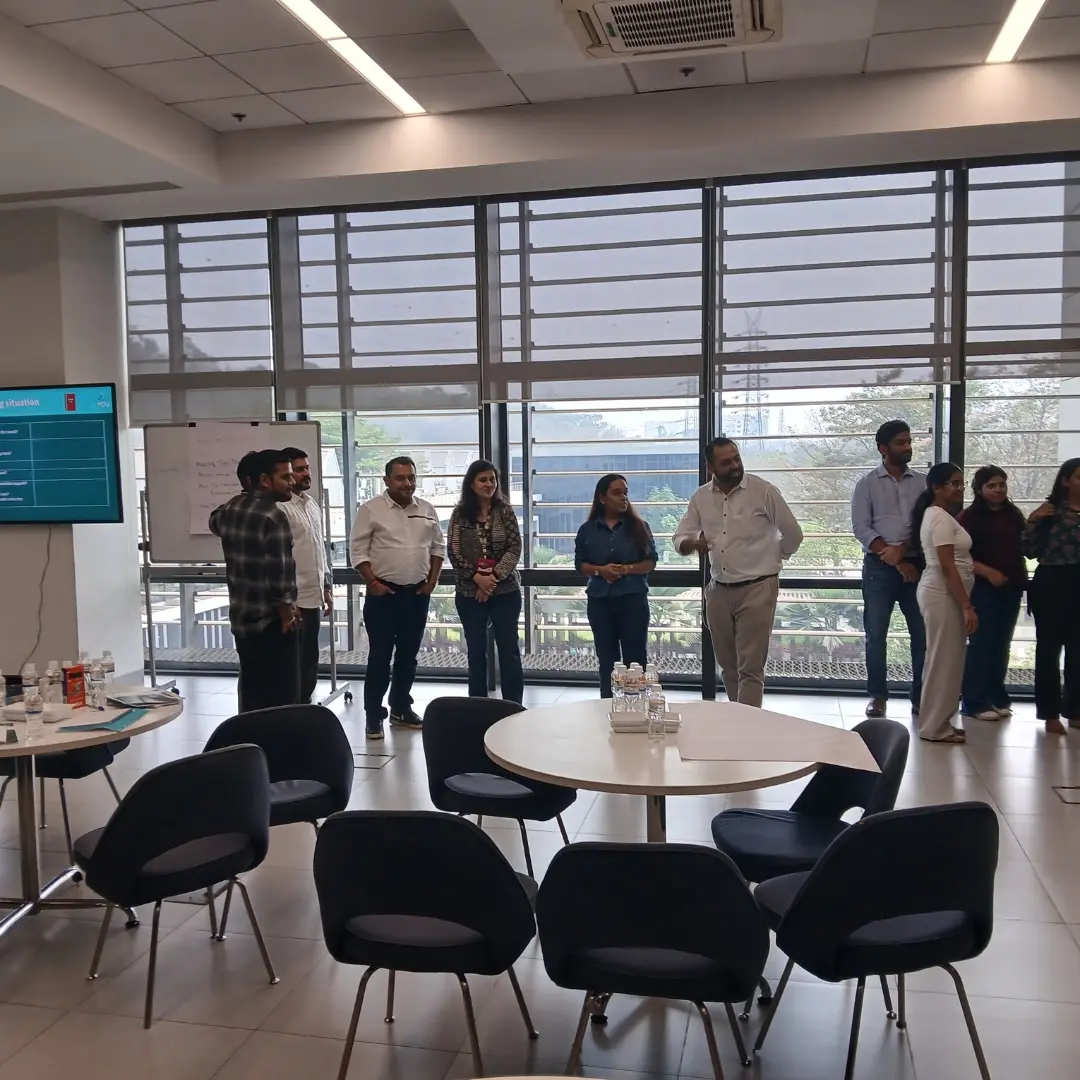
- Program Duration: 1-day intensive workshop designed to maximize engagement and behavioral insight through experiential learning, enabling participants to internalize systems thinking concepts through direct experience rather than theoretical instruction.
- Participant Count: 18 carefully selected mid-senior leaders representing critical functions across the supply chain ecosystem, ensuring diverse perspectives while maintaining cohort size that enabled deep interaction and personalized reflection.
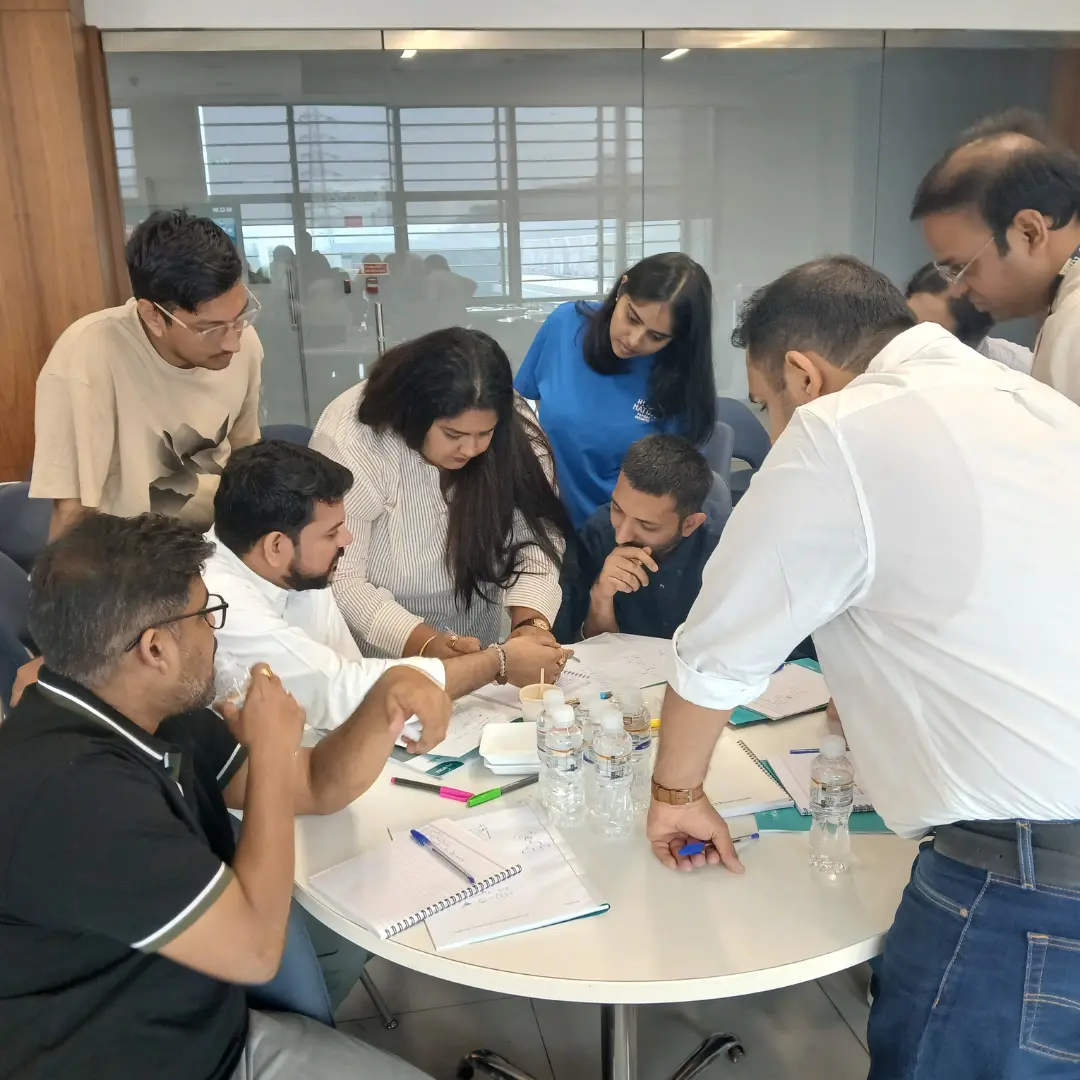
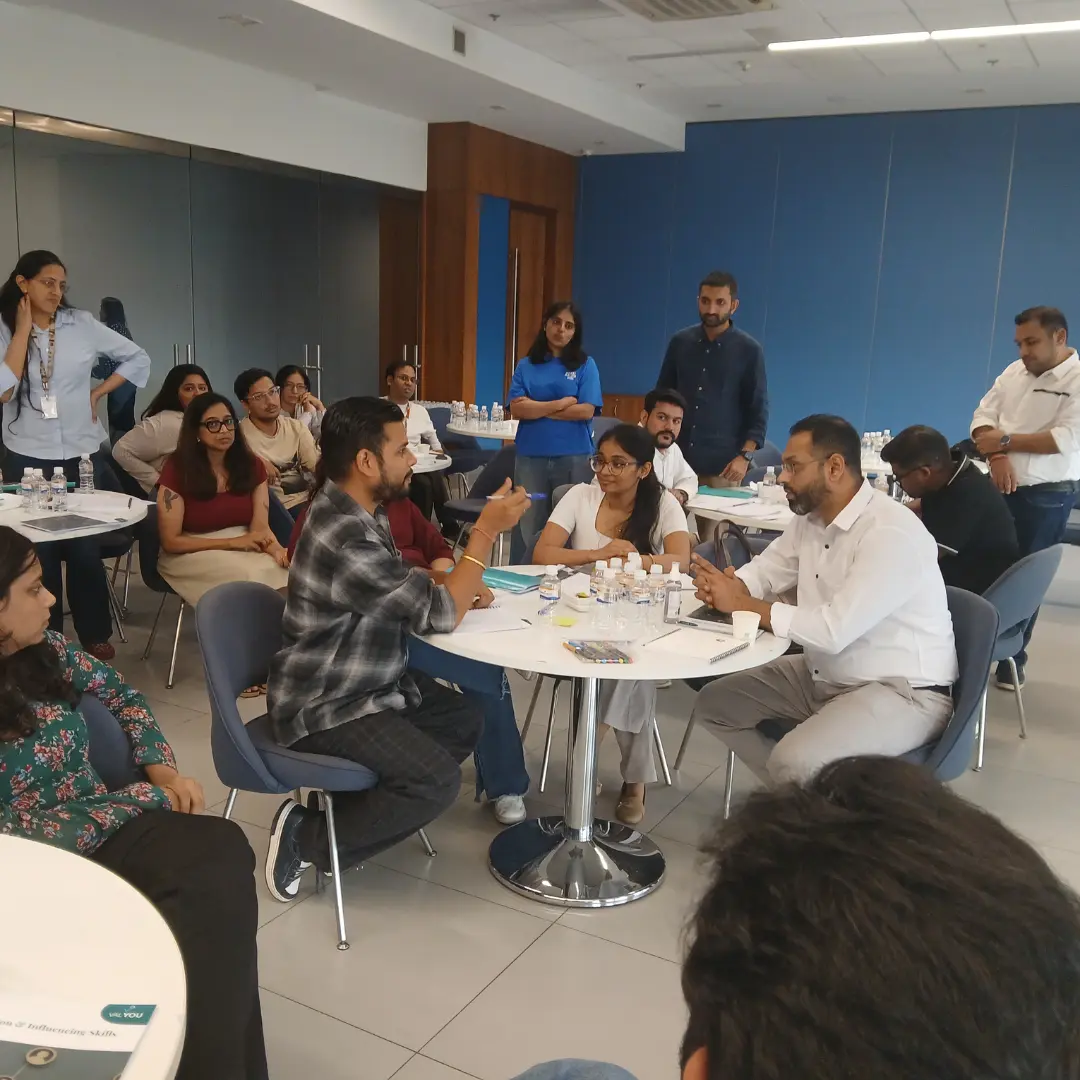
- Experiential Learning Architecture: Highly interactive simulation-led workshop combining hands-on experiential activities that surfaced system dynamics and coordination challenges, systems-thinking exercises revealing interdependencies and alignment gaps, reflection-based leadership discussions connecting insights to daily work contexts, and collaborative problem-solving sessions generating practical application strategies.
- Learning Philosophy: Emphasis on behavioral insight over conceptual knowledge, with participants experiencing firsthand how coordination breakdowns occur, discovering through reflection how their actions influence broader outcomes, and developing personal ownership for strengthening system performance through changed behavior.
Key Themes Covered
1. Linking Strings – Understanding System and Link Responsibility
Participants explored fundamental concepts of System Responsibility (SR) and Link Responsibility (LR) through powerful experiential simulations that made abstract interdependencies tangible and visible. Leaders directly experienced how coordination gaps emerge, how communication breakdowns cascade through interconnected workflows, and how dependencies between functions create vulnerability when any link fails to fulfill its responsibility. The module revealed how business performance depends not just on individual excellence but on the quality of connections between functions—building awareness that prompted many participants to recognize coordination failures they had previously attributed to others’ shortcomings.
2. Holding the System in Mind – Mapping Alignment and Synergy
Leaders developed capabilities for maintaining enterprise-wide perspective while making daily decisions within their functional domains. Through collaborative mapping exercises, participants examined how alignment is created or eroded across teams, workflows, and stakeholder groups, discovering patterns of misalignment they had not previously recognized. The module emphasized practical strategies for strengthening synergy through everyday behaviors—how information sharing practices either connect or isolate functions, how decision-making approaches either optimize local outcomes or enterprise performance, and how leadership behaviors either build collaborative culture or reinforce silos.
3. Growth Mindset and Psychological Ownership
Participants explored how mindset shapes leadership effectiveness in complex adaptive systems where perfect planning is impossible and continuous learning is essential. Drawing on growth mindset principles, leaders examined their relationship to uncertainty, failure, and feedback—recognizing how fixed mindset patterns limit adaptability and continuous improvement. The module developed psychological ownership, encouraging leaders to embrace responsibility for outcomes beyond their formal authority, to view challenges as opportunities for development rather than threats to competence, and to approach change with curiosity and resilience rather than defensiveness or resistance.
Looking to build a customized leadership journey? We're here to help!
- Tailored Corporate Leadership Programs
- Outcome-Oriented Learning
- Gamified Assessments & Experiential Engagements
 GlobalGyan Leadership Academy