
Content is Free. So Why Are We Paying to Show Up?


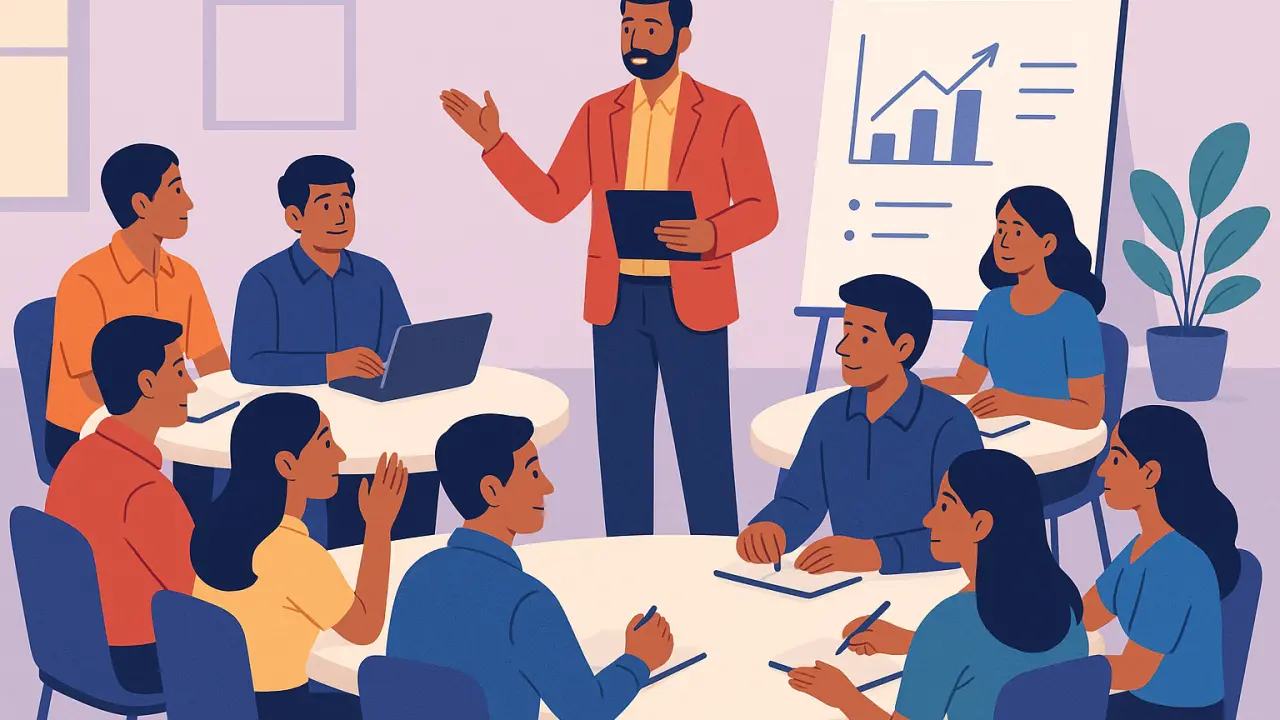
Here’s a strange thing about 2025: we have more free knowledge or content than any generation in history… and yet we’re paying serious money to sit in a stadium and watch a human being do something we could have watched on a screen.
The Internet has made content free or near-free, but live experiences are seeing a surge. Concerts. Sports. Stand-up. Even podcasters turning into touring acts. At first glance it sounds like a contradiction. If content is abundant, shouldn’t demand collapse?
This thought hit me after a recent conversation between Elon Musk and Nikhil Kamath. Live events would be the scarce commodity, Musk said, and would fetch a premium over anything digital.
Content is information.
Experience is transformation. And transformation is scarce.
Now bring this to the space of learning.
The Real Problem Isn’t Lack of Information. It’s Lack of Conversion.
Most professionals don’t have a learning problem. They have a follow-through problem.
We all know what to do: think strategically, talk to customers, give feedback early, listen better, delegate….
The issue is that knowing sits comfortably in the brain. Doing is messy. Doing involves ego, fear, habits, politics, and the little matter of real life.
Online learning is fantastic at feeding your mind.
But leadership and entrepreneurship are judged by what shows up in your calendar, your decisions, your team dynamics, and your numbers.
In other words: the world doesn’t reward what you understood. It rewards what you actually changed.
Why In-Person Learning Hits Differently (When Done Well)
Let me say the quiet part loudly: a lot of e-learning is content consumption wearing a learning costume.
You watch a brilliant video on “influencing without authority” and then… you go back to sending passive-aggressive emails with “as discussed” in bold.
Live learning wins because it can produce what digital learning struggles to manufacture.
First, it introduces friction. In a good room, you can’t just nod and move on. You have to try. You have to speak. You have to commit. You have to face your own pattern.
Second, learning in person gives you live feedback. The fastest way to improve isn’t more content. It’s a clean mirror held up by a coach, a peer, or a room that responds honestly to how you show up. That feedback loop is brutally efficient.
Third, it creates social energy. Humans change in groups. Not because we are weak, because we are wired that way. The courage you don’t have alone often appears when you see others taking risks. The “I thought it was only me” moment is not a side benefit. It is the medicine.
And finally, live learning creates presence. Online, focus is optional. In a room, focus becomes the default, because you’ve physically crossed the line from “I should” to “I am.”
The Catch: “Experiential” Shouldn’t Mean “Fun & Games”
Now, a warning label.
Corporate learning has been harmed by two equal and opposite sins.
One is the cult of slides: dense frameworks, endless models, the belief that if we cover enough content, competence will magically appear.
The other is what I call engagement theatre: games & activities that generate laughter but leave no residue. People enjoy the day, share photos, and return to work unchanged, except for a slightly better mood and a tote bag.
Real experiential learning is not “fun.” It can be enjoyable, but it is also demanding. It forces trade-offs. It makes people choose under constraints. It creates tension, reflection, and practice. And it links every exercise to a capability that actually matters on the job.
If an activity can be removed and the learning outcome still happens, the activity was decoration.
Why Corporates Should Spend More on Live Learning (Not Less)
If you’re a corporate leader, the point of live learning isn’t “training.”
It’s acceleration.
Good in-person learning compresses time. It speeds up adoption because people rehearse the behavior, receive coaching, and leave with a higher likelihood of implementation. It also creates shared language: teams start naming problems the same way, which sounds trivial until you realise how much execution gets killed by misalignment.
And there’s an underrated benefit: a room surfaces reality. Incentives. Fear. Cross-functional mistrust. The gap between stated strategy and actual behavior. These things don’t show up in an LMS dashboard. They show up when adults talk honestly, in a well-held space.
The ROI of a great program is not NPS. It’s improved decisions, better collaboration, and fewer expensive leadership mistakes.
Why Individuals Should Also Pay to Show Up
If you’re a founder or a leader, live learning is not a luxury purchase. It’s an operating system update.
Not because you’ll discover a secret framework. You won’t. There are no secrets left.
But you will get something far more valuable: a mirror, a rehearsal space, and a push.
You’ll test your assumptions. You’ll see your blind spots. You’ll practice the hard conversation instead of reading about it. You’ll borrow courage from the room and return with momentum, something no podcast has ever delivered reliably.
A Note to Faculty: Stop Being a Content Provider. Become a Day-Maker.
Here’s the uncomfortable truth for anyone who teaches: your content is no longer scarce. Your craft is.
So what should faculty do differently?
First, design the day like a director, not a lecturer. Create a narrative arc. Build tension. Introduce dilemmas. Make participants decide, defend, and reflect. People remember scenes and moments. They don’t remember slide 47.
Second, become a performer, without becoming a clown. Performance is the craft of managing attention. Voice, pace, silence, storytelling, movement, improvisation. In a distracted world, attention is not given; it is earned.
Third, replace coverage with conversion. Fewer concepts. More practice. More repetition. More feedback. The goal is not “they understood.” The goal is “they can do it on Monday.”
Finally, design the “after” before you design the “during.” If the learning does not travel back to work, it becomes an event, not an intervention. Build application rituals, peer accountability, and simple mechanisms that force the new behavior to show up in real life.
The Punchline
Content is cheap now. Context is expensive.
Information is everywhere. Transformation is rare.
That’s why people are paying to show up, at concerts, at sports, at creator tours… and increasingly, in learning rooms too.
Because in a world drowning in knowledge, the real premium is for experiences that change you.




 GlobalGyan Leadership Academy
Responses