
Identity After the Job Title

For many years of my life, whenever someone asked, “Who are you?”, the answer was easy: “I’m Srini from Tata Communications.”
That was my identity. My introduction. My armour. My shorthand for credibility.
And then one day, all of it vanished.
Not because of a scandal, not because I was pushed out, not because I had a grand entrepreneurial vision. I quit simply because I needed time.
But the moment the ID card was gone, something else disappeared with it, a part of me.
When the job leaves you
Quitting a job doesn’t just change your calendar. It shakes your identity.
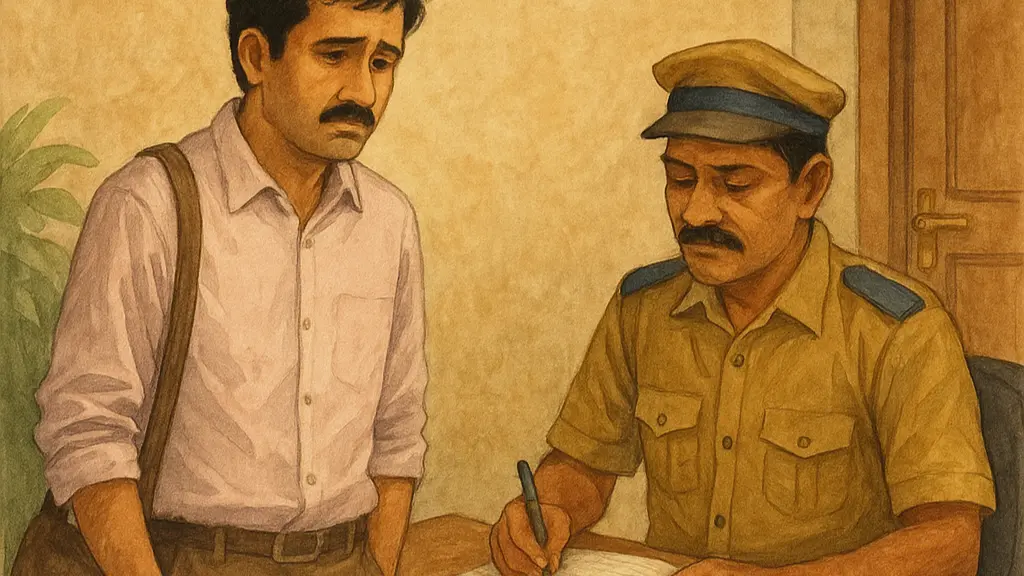
In the first few weeks after I left, even the simplest things felt awkward. I’d go to an office to meet a friend, and the security guard would ask, “Which company are you from?”
What do I tell him: “I am currently unemployed”? “I’m taking a break”? “I’m exploring”?
Try explaining existential transitions to a building security guard.
In one such corporate reception, I just wrote ‘GlobalGyan’, the name of a blog I used to write. That one awkward moment paved the way for the company that came later. But at that time, it was mostly an act of survival: I needed something to write on the register.
The truth is this:
Most of us unknowingly anchor our identity to our employer.
The logo, the brand, the visiting card — they give us legitimacy and social standing we don’t realise we depend on until they disappear.
When that goes away, you feel naked.
Losing the perks you never earned
In the corporate world, especially in large groups like the Tatas, you unknowingly get used to an entire ecosystem responding to your job title. Flights held for you. Phone calls returned quickly. People taking your email seriously. Your secretary calling ahead so your arrival is expected.
But none of this is about you.
It’s the chair.
It’s the brand.
When the chair goes away, so does the illusion.
For months after I quit, I would walk into receptions of big companies and feel my blood boil at the wait times. Earlier someone would call ahead; now I had to explain myself. Earlier I was ushered in; now I stood waiting for someone to check if I was expected.
There’s a moment every entrepreneur knows too well:
the first time you realise no one cares who you were.
It sounds harsh. But it’s the truth we all need.
Unlearning corporate conditioning
Leaving employment forced me to unlearn things I didn’t even know I had learned.
1. The illusion of unlimited resources
In a large company, you feel like you can attempt anything. There are teams, budgets, vendors, buffers. You may think you’re being frugal, but compared to a startup, you’re living in an alternate universe.
After starting up, every expense feels personal. Every hire becomes a commitment. Every software subscription makes you question your existence.
And the biggest danger?
You become stingy.
Entrepreneurs sometimes mistake cash preservation for strategy. But real growth requires courage. It requires spending. It requires investing before you see certainty.
2. The habit of speed enabled by others
In corporate life, your speed is artificially amplified.
Someone else calls.
Someone else follows up.
Someone else sends reminders.
When you start on your own, your speed collapses. You realise you were never fast, your organisation was. And you must now build a new rhythm that is your own.
3. Confusing hierarchy with capability
One of the hardest pills to swallow is this:
In entrepreneurship, nobody cares about your previous designation.
Your past doesn’t build your future.
Your execution does.
So what does this mean for those considering life after employment?
If you’re thinking of leaving corporate life, whether for entrepreneurship, freelance consulting, writing, or anything else, here are the truths I have learnt the hard way:
1. Build an identity outside your employer before you leave
Write. Speak. Create. Build networks that aren’t tied to your job title.
2. Expect an identity void — it’s normal
It will feel uncomfortable to say “I’m on my own.”
That discomfort is part of the unlearning.
3. Your corporate strengths won’t automatically translate to entrepreneurial strengths
Strategic thinking? Useful.
Slide making? Useful.
But the most important skills?
- Resourcefulness
- Patience
- Emotional stamina
- Humility
- The willingness to sweep your own floor if needed
4. Don’t underestimate how long it takes to build something real
Most “overnight successes” took 10–20 years.
13 years later, I am still figuring out what success means.
5. Entrepreneurship is not about freedom — it’s about responsibility
Your team, your customers, your cash flows, your decisions.
Freedom comes much later, if at all.
6. Work on your physical and mental fitness now
Your body is the engine.
Your mind is the fuel.
Both need investment.
7. Don’t disconnect from family while chasing your new identity
You quit to spend more time with them.
Don’t lose them again trying to build something new.
The Real Work Begins After You Leave
Stepping away from a job title isn’t the end of anything; it is the beginning of a different kind of work.
It forces you to confront questions that employment often protects you from:
- Who am I when the logo disappears?
- What value do I create when no one assigns me tasks?
- What is my pace when the organisation’s machinery isn’t carrying me?
- And, most importantly, what choices would I make if I had no corporate script to follow?
For anyone contemplating the shift, the real preparation isn’t a business plan or a revenue model, it is the willingness to build a new identity from first principles.
Everything else can be learned.





 GlobalGyan Leadership Academy
Eye opener article: “Identity After the Job Title”