
Sustaining Leadership Excellence @ Leading FMCG Company

Client
Context
Building leadership capability isn’t a one-time event—it’s a continuous journey that requires sustained practice, real-world application, and regular reinforcement. Many organizations invest heavily in foundational leadership programs only to watch capabilities fade as participants return to daily operational pressures without structured opportunities to apply and deepen their learning. The challenge becomes even more acute for mid-level managers who understand leadership concepts but struggle to translate them into consistent behavior change when facing complex business decisions and cross-functional challenges.
A leading FMCG company recognized this reality after their foundational LEAD program successfully introduced leadership concepts to mid-level managers. They needed a follow-on intervention that would move beyond conceptual understanding to genuine leadership practice—creating sustained engagement that reinforced strategic thinking, sharpened business decision-making, and built cross-functional collaboration through application rather than additional theory.
Client
Objective
The organization’s objective was to design an advanced, application-focused program that would prepare mid-level leaders to navigate ambiguity, align decisions with strategic priorities, and foster continuous leadership development through structured practice. They needed a solution that would maintain engagement over time, create healthy competition that drove excellence, and provide regular touchpoints for leadership development without requiring extensive time away from work. The goal was sustainable behavior change through repeated application of leadership capabilities to real and simulated business challenges that mirrored the complexity these managers faced daily.
Program Design
- Program Duration: 5-month virtual journey maintaining sustained engagement through monthly challenges, providing continuous leadership development without extended disruption to business operations while creating rhythm and consistency in leadership practice.
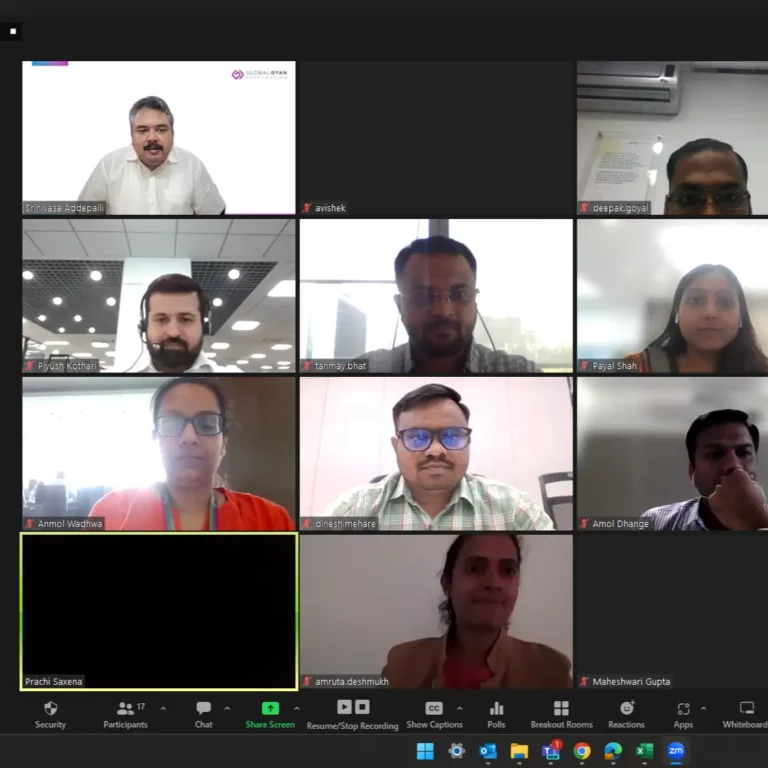
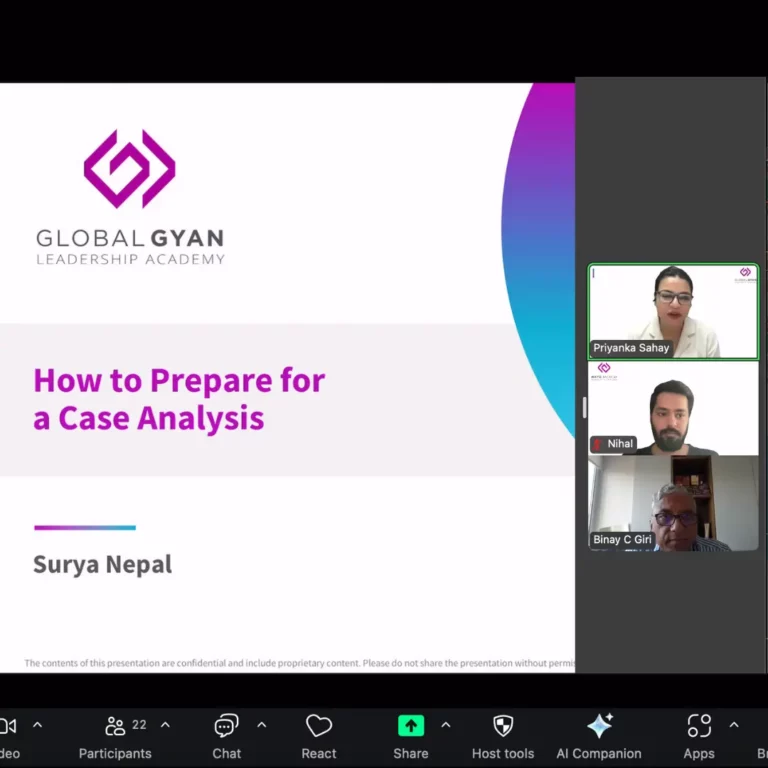
- Monthly Case Challenge Structure: Six carefully curated and custom-designed case studies (combining external best practices with internal business scenarios) delivered monthly with launch sessions introducing frameworks, case-solving toolkits providing analytical approaches, 2-week response windows allowing thoughtful analysis, and live debrief sessions where participants learned from peer approaches and faculty insights.
- Gamified Recognition and Engagement: Comprehensive reward structure including case-wise winners recognition, cumulative leaderboard tracking sustained performance, direct CEO interactions for top performers, trophies celebrating excellence, and TED-style presentation coaching for case champions—all designed to maintain motivation and create aspirational leadership development culture.
- Digital Learning Platform: Dedicated portal for seamless case submissions, transparent scoring and feedback, resource repository, and progress tracking, ensuring accessibility and engagement throughout the virtual journey.
Key Themes Covered
1. Strategic Decision-Making Under Ambiguity
Participants practiced making strategic choices with incomplete information, learning to balance analytical rigor with intuitive judgment. Through monthly cases requiring strategic decisions, managers developed confidence in their ability to identify critical variables, evaluate trade-offs systematically, and commit to courses of action despite uncertainty—essential capabilities for mid-level leaders navigating complex FMCG market dynamics.
2. Performance Management and Accountability
Leaders applied frameworks for driving team performance, setting clear expectations, and holding people accountable for results. The cases challenged participants to address underperformance constructively, reward excellence appropriately, and create performance cultures that balanced compassion with commercial discipline—moving beyond theoretical knowledge to practical application in realistic scenarios.
3. Business Communication for Impact
Managers honed their ability to communicate complex business recommendations clearly and persuasively through case presentations and written submissions. This included distilling analysis into compelling narratives, adapting communication style for different audiences, and building influence through clarity and conviction—skills that directly transferred to their workplace presentations and stakeholder interactions.
4. Financial Acumen for Better Decisions
Participants strengthened their financial literacy and commercial thinking through cases requiring P&L analysis, investment evaluation, and resource allocation decisions. This built confidence in speaking the language of business, understanding financial implications of operational choices, and contributing meaningfully to commercial discussions—bridging the gap between functional expertise and business leadership.
5. Influencing Without Formal Authority
Leaders practiced the art of driving outcomes across organizational boundaries without relying on positional power. Through cases involving matrix organizations and cross-functional challenges, participants developed strategies for building coalitions, navigating stakeholder politics, and achieving alignment through relationship-building and credibility rather than hierarchical control.
6. Cross-Functional Collaboration and Integration
The program emphasized breaking down silos through cases that required holistic business thinking spanning multiple functions. Participants learned to appreciate diverse functional perspectives, identify interdependencies, and develop integrated solutions that optimized overall business outcomes rather than sub-optimizing for individual functions—critical for success in complex FMCG organizations.
Looking to build a customized leadership journey? We're here to help!
- Tailored Corporate Leadership Programs
- Outcome-Oriented Learning
- Gamified Assessments & Experiential Engagements
 GlobalGyan Leadership Academy